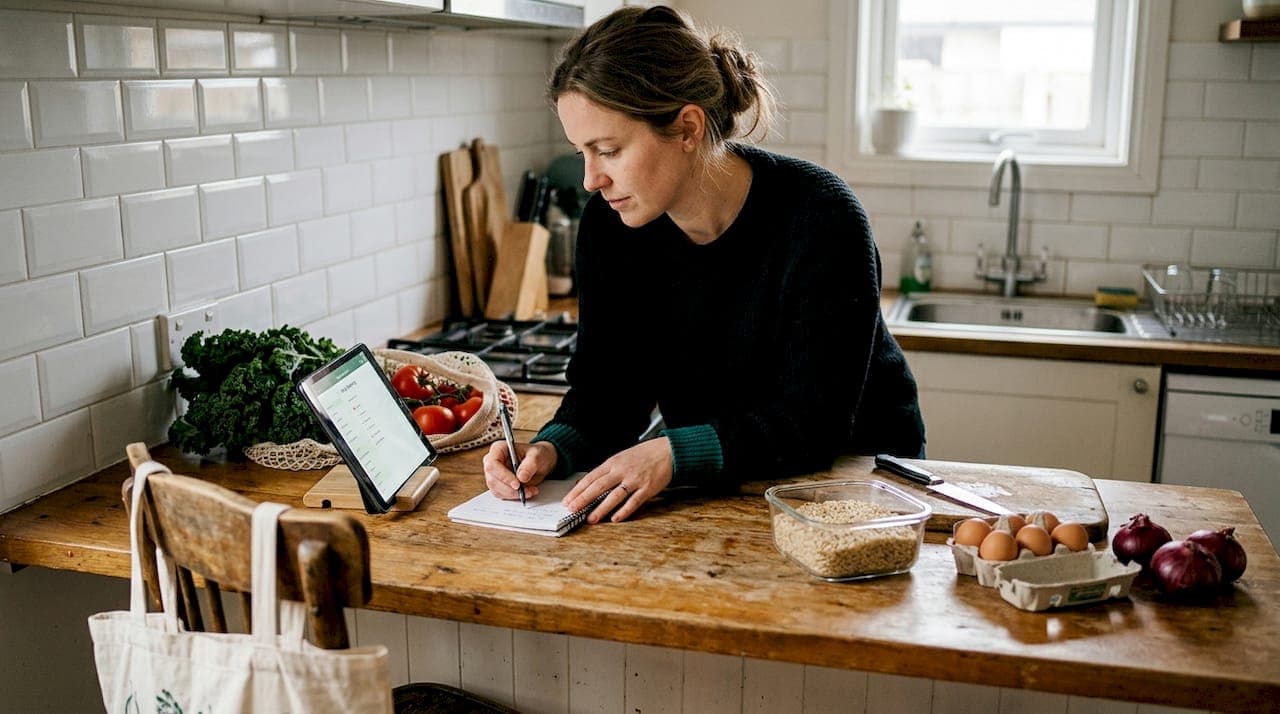
Healthy meal planning doesn't have to mean counting every calorie or spending hours in the kitchen. Many people abandon their nutrition goals because traditional approaches feel too rigid or time-consuming. The truth is, you can build sustainable eating habits using simple frameworks that prioritize whole foods and flexibility over perfection. This guide walks you through practical strategies to create meal plans that fit your lifestyle, save money, and reduce daily decision fatigue without complex tracking or elaborate recipes.
Table of Contents
- Key Takeaways
- Understanding healthy meal planning basics
- Choosing a meal planning framework that fits your lifestyle
- Practical steps for execution: batch prep, grocery lists, and budget-friendly tips
- Troubleshooting common challenges and maximizing sustainable success
- Discover Nutrify AI for personalized meal planning
- Frequently asked questions
Key Takeaways
| Point | Details |
|---|---|
| Whole foods focus | Plan meals around vegetables, fruits, lean proteins, whole grains, and healthy fats to nourish your body without heavy calorie counting. |
| Batch prep efficiency | Batch cook base ingredients and reuse them across meals to save time and reduce waste. |
| Personalization matters | Adapt plans to your schedule budget cooking skills and taste preferences to improve adherence. |
| Structure and flexibility | Use a hybrid approach that provides enough structure to cut decision fatigue while keeping some meals flexible for spontaneity. |
Understanding healthy meal planning basics
Effective meal planning starts with understanding what makes a meal truly nourishing. The foundation rests on whole foods: vegetables, fruits, lean proteins, whole grains, and healthy fats. These ingredients provide the nutrients your body needs without requiring complicated calculations or restrictive eating patterns.
Research shows that plans emphasizing 30g+ fiber daily and 80g+ protein create balanced plates without calorie mandates. Instead of obsessing over numbers, you build meals around nutrient density and satisfaction. A typical plate might include a palm-sized portion of protein, two fists of vegetables, a cupped handful of carbs, and a thumb of healthy fats. This visual approach simplifies portion control while allowing natural variation based on hunger and activity levels.
Simplicity matters more than variety when you're starting out. Choose recipes with overlapping ingredients so one grocery trip covers multiple meals. If you buy chicken, sweet potatoes, and broccoli, you can create stir-fries, sheet pan dinners, and grain bowls without needing dozens of different items. This strategy reduces both mental load and food waste.
Personalization makes the difference between a plan you follow for two weeks and one that becomes second nature. Your schedule, cooking skills, budget, and taste preferences should shape your approach. Someone working 60-hour weeks needs different solutions than a parent with flexible hours and three kids to feed. Start by personalizing healthy meal plans around your actual constraints, not an idealized version of your life.
Pro Tip: Batch prep doesn't mean eating the same meal seven times. Cook base ingredients like grains, proteins, and roasted vegetables, then mix and match them throughout the week with different sauces and seasonings.
Choosing a meal planning framework that fits your lifestyle
The right framework depends on how much structure you need versus how much flexibility you crave. Understanding the tradeoffs helps you pick an approach that actually sticks.

Structured fixed menus work well if decision fatigue drains your energy. You plan every meal in advance, shop for exact ingredients, and follow the menu throughout the week. This approach reduces decision fatigue by 73% because you eliminate daily food choices. Beginners often thrive with this method since it removes guesswork and builds consistent habits quickly.
Flexible planning takes the opposite approach. You prep ingredients and create a loose framework, but choose specific meals based on hunger, schedule, and mood. Studies show flexible plans boost satisfaction by 89% and variety by 67%. You might prep chicken, quinoa, and three types of vegetables, then decide each day whether you want a bowl, wrap, or salad. This method requires more planning skill but feels less restrictive over time.
| Framework | Best for | Pros | Cons |
|---|---|---|---|
| Structured fixed | Beginners, busy schedules | Low decision fatigue, easy grocery shopping | Can feel monotonous, less adaptable |
| Flexible options | Experienced planners, varied schedules | High satisfaction, accommodates social eating | Requires planning skills, potential for choice paralysis |
| Hybrid approach | Most people long-term | Balances ease and variety | Takes practice to optimize |
A hybrid approach often works best after you've built basic habits. Structure your weekday breakfasts and lunches for efficiency, but keep dinners flexible to accommodate social plans or cravings. This balance maintains the stress-reducing benefits of planning while preserving spontaneity where it matters most.
Your personality matters too. If you love routine and find comfort in predictability, lean toward structure. If variety energizes you and repetition feels suffocating, build in more flexibility from the start. Neither approach is superior; the best framework is the one you'll actually follow.
Pro Tip: Start with a structured plan for two weeks to build momentum, then gradually introduce flexible elements. This progression builds confidence while preventing the overwhelm that comes from too many choices too soon.
Explore different meal planning strategies to find what resonates with your daily rhythm and food relationship.
Practical steps for execution: batch prep, grocery lists, and budget-friendly tips
Knowing the theory means nothing without a clear execution plan. Here's how to turn concepts into actual meals on your table.
Batch cooking workflow:
- Choose 2-3 proteins, 2-3 carb sources, and 4-5 vegetables for the week
- Block 2-3 hours on a weekend day for prep work
- Cook proteins using different methods: bake chicken, grill salmon, slow-cook beans
- Roast multiple sheet pans of vegetables with varied seasonings
- Prepare grains in a rice cooker or Instant Pot while other items cook
- Store components in clear containers labeled with dates
- Assemble meals throughout the week in 10 minutes or less
This approach transforms meal prep from a daily chore into a weekly project. You're not cooking seven complete meals; you're creating building blocks that combine into different dishes.
Smart grocery shopping strategies:
- Build your list around pantry staples: rice, beans, pasta, canned tomatoes, olive oil, spices
- Buy proteins on sale and freeze portions for future weeks
- Choose frozen vegetables for convenience and longer shelf life without nutrient loss
- Shop seasonal produce for better prices and peak flavor
- Compare unit prices, not package prices, to find true value
Budget-conscious planning doesn't mean sacrificing nutrition. Budget-friendly plans cost £29/week per person using sales and pantry staples. The key is planning around what's affordable rather than forcing expensive ingredients into every meal.
| Prep method | Time investment | Cost impact | Nutritional benefit |
|---|---|---|---|
| Full batch cooking | 2-3 hours weekly | Moderate savings | High consistency |
| Ingredient prep only | 1-2 hours weekly | High savings | High flexibility |
| No prep, daily cooking | 30-45 min daily | Variable | Depends on choices |
Leftovers are your secret weapon against waste and expense. Plan for intentional repeats: make extra dinner to pack for tomorrow's lunch. Repurpose ingredients across meals: roasted vegetables from Monday's dinner become Tuesday's omelet filling. This strategy cuts both cooking time and grocery costs while maintaining variety through different preparations.
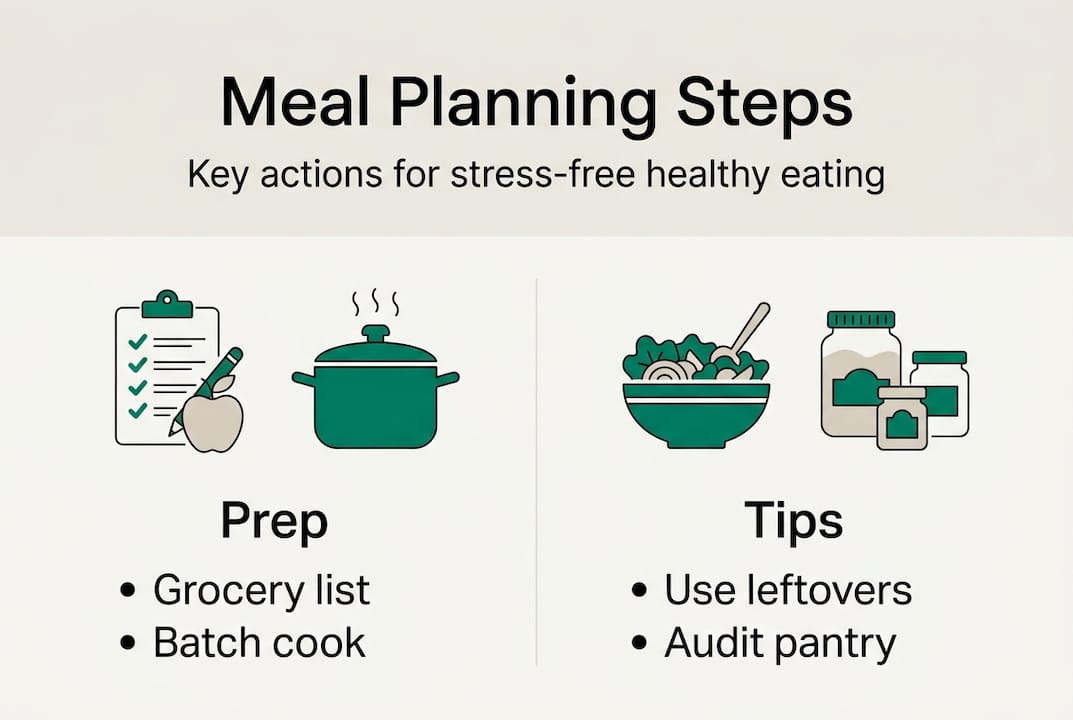
Pro Tip: Conduct a 10-minute pantry audit before shopping. You'll avoid buying duplicates and discover forgotten ingredients that can anchor this week's meals, slashing your grocery bill by 15-20%.
Find more budget meal planning tips to stretch your food dollars without compromising health goals.
Troubleshooting common challenges and maximizing sustainable success
Even the best-laid plans hit obstacles. Anticipating common pitfalls and having strategies ready keeps you moving forward instead of abandoning the entire approach.
Avoiding burnout and perfectionism:
- Accept that some weeks will involve more repeats or convenience foods
- Don't force yourself to prep if you're exhausted; adjust expectations
- Remember that consistent good-enough beats occasional perfect
- Build in one or two "free" meals weekly for takeout or dining out
Perfectionism kills more meal plans than any other factor. You miss one prep session, feel like a failure, and quit entirely. Instead, view meal planning as a flexible tool that serves you, not a rigid system you serve.
Listening to hunger cues improves sustainability without calorie tracking. Your body provides reliable signals about when and how much to eat when you tune in instead of overriding them with external rules. Some days you'll eat more because you're genuinely hungrier; other days less because you're satisfied sooner. This natural variation is healthy and normal.
Handling schedule disruptions:
- Keep backup options like canned beans, frozen vegetables, and eggs for chaotic days
- Don't view unplanned restaurant meals as failures; they're part of balanced living
- Adjust next week's plan based on what worked and what didn't this week
- Use a hybrid approach that builds in flexibility for unpredictable schedules
"Flexible adherence to general nutrition principles outperforms rigid rule-following for long-term success. The goal is progress and consistency, not perfection."
Social eating presents another common challenge. You can't control restaurant menus or dinner party offerings, and trying to maintain perfect control in social settings damages relationships and enjoyment. Instead, plan for these occasions by eating lighter earlier in the day if you know a big meal is coming, or simply enjoy the experience without guilt and return to your normal patterns the next day.
Motivation naturally ebbs and flows. Build systems that work even when motivation is low: simpler recipes, more batch prep, lower expectations for variety. The weeks when you're excited about cooking, try new recipes and elaborate preparations. The weeks when you're drained, rely on your simplest rotation of meals. Both approaches move you toward your goals.
Pro Tip: Track your energy levels and schedule patterns for a month to identify your natural rhythm. Plan more ambitious cooking projects during high-energy periods and keep low-energy weeks simple with proven favorites.
Develop intuitive healthy eating methods that honor both structure and flexibility for lasting success.
Discover Nutrify AI for personalized meal planning
If you're ready to simplify healthy eating without the guesswork, Nutrify AI takes the principles in this guide and personalizes them to your specific goals, preferences, and budget. Instead of generic meal plans that ignore your lifestyle, you get tailored recommendations that actually fit your schedule and taste.
The platform focuses on balanced whole-food meals without requiring calorie counting or complex tracking. You'll receive meal suggestions that align with your nutritional targets while maintaining the flexibility to adjust based on hunger, social plans, and daily realities. It's like having a nutritionist in your pocket who understands that real life doesn't follow perfect meal plans.
Explore how Nutrify AI's personalized meal planner can support your journey toward stress-free healthy eating. Review the terms of service and privacy policy to understand how the platform protects your data while delivering customized nutrition guidance.
Frequently asked questions
What is the easiest healthy meal planning method for beginners?
Structured fixed menus work best when you're starting out because they eliminate decision fatigue and provide clear direction. You plan every meal in advance, create a precise grocery list, and follow the menu throughout the week without needing to make daily food choices. Once you've built confidence and consistency over a few weeks, you can gradually introduce flexible elements to increase variety and accommodate your evolving preferences.
How can I stick to a healthy meal plan without counting calories?
Focus on whole foods and use visual portion guides like hand portions instead of measuring everything. A palm of protein, two fists of vegetables, a cupped handful of carbs, and a thumb of fat creates balanced meals without tracking. Listen to your hunger and fullness cues rather than eating predetermined amounts, which builds a sustainable relationship with food that doesn't require constant monitoring or apps.
What are budget-friendly tips for meal planning?
Buy seasonal produce and frozen vegetables to cut costs while maintaining nutritional quality. Plan meals around pantry staples like beans, rice, and pasta, then add proteins when they're on sale. Shop with a detailed list based on your meal plan to avoid impulse purchases, and compare unit prices rather than package prices to find the best value. Intentional leftovers and ingredient overlap across multiple meals further reduce both waste and expense.
Can batch cooking really save time for busy schedules?
Batch cooking cuts daily cooking time from 30-45 minutes to under 10 minutes by preparing components in advance. Spending 2-3 hours on a weekend to cook proteins, grains, and vegetables gives you ready-to-assemble meals throughout the week. Reusing ingredients across different dishes streamlines both shopping and prep while maintaining variety through different combinations and seasonings. The upfront time investment pays off in reduced stress and faster weeknight meals.